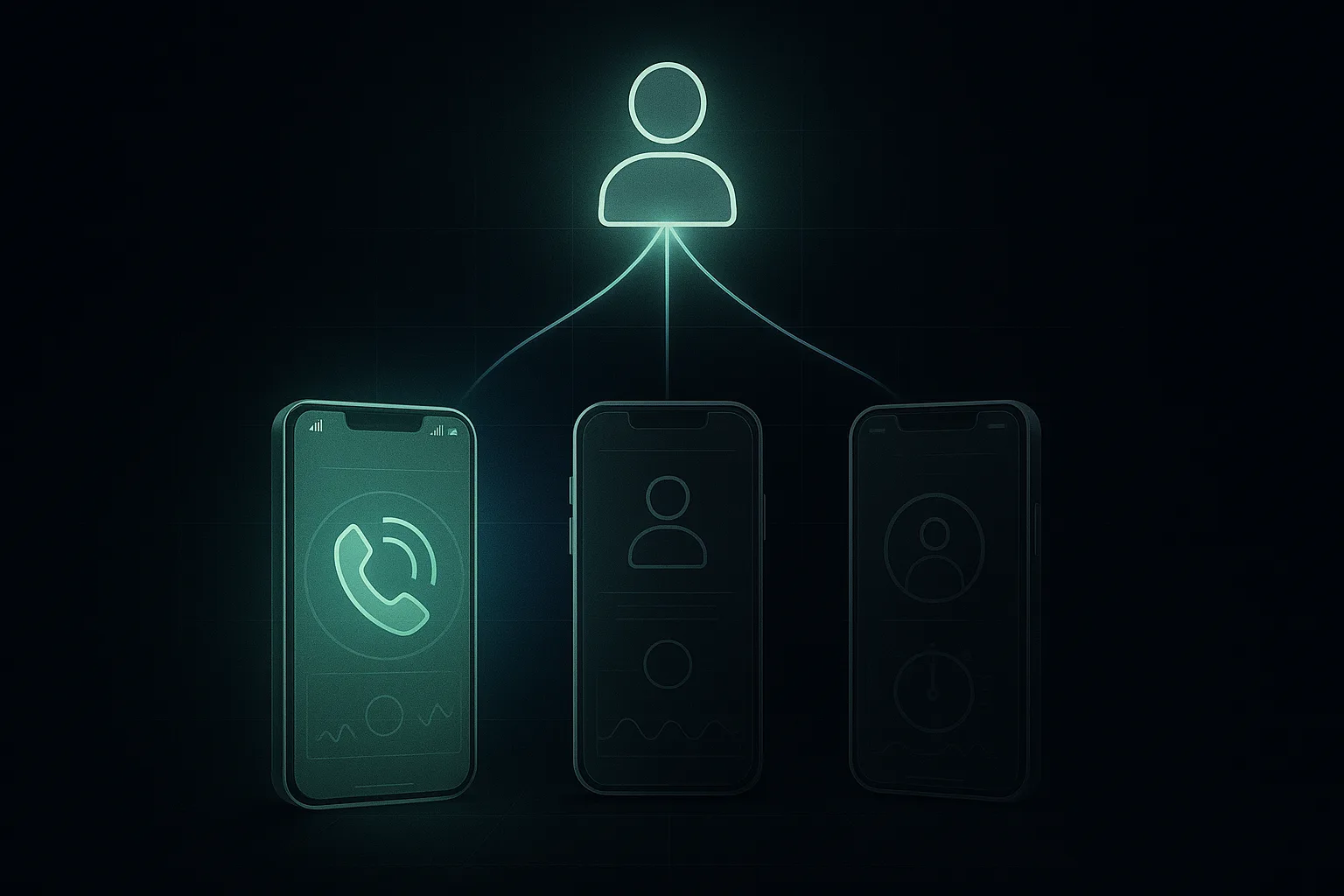
Here is something that is easy to miss because it happens off screen. When someone fills out your form, they almost never fill out only yours. They found three or four businesses that do what you do, and they reached out to all of them, because that is how people shop for anything they are unsure about. So the real contest is not you against a silent inbox. It is you against two or three competitors who got the same lead at the same time, and the one who calls first usually walks away with the job. Harvard Business Review found that businesses which respond within an hour are about 7 times more likely to have a real conversation with the decision maker. Being first is not a small edge. It is most of the game.
01Your lead is shopping, not choosing you yet
The mistake is thinking of a new lead as “someone who picked us.” They have not picked anyone. They have a problem, they did a search, and they cast a wide net.
Think about the last time you needed a plumber, a dentist, a contractor you had never used. You did not carefully select one business and wait patiently by the phone. You filled out a couple of forms, maybe called one place, and got on with your day. Whoever got back to you first and seemed competent, that is who you went with. You did not go back and finish evaluating the others. The decision got made the moment someone good enough answered.
Your leads do the exact same thing to you. They are not sitting there loyal to you, waiting. They are comparing, and the comparison ends the second someone earns their trust.
02The first-to-call effect is real and measured
This is not just intuition. It shows up in the research.
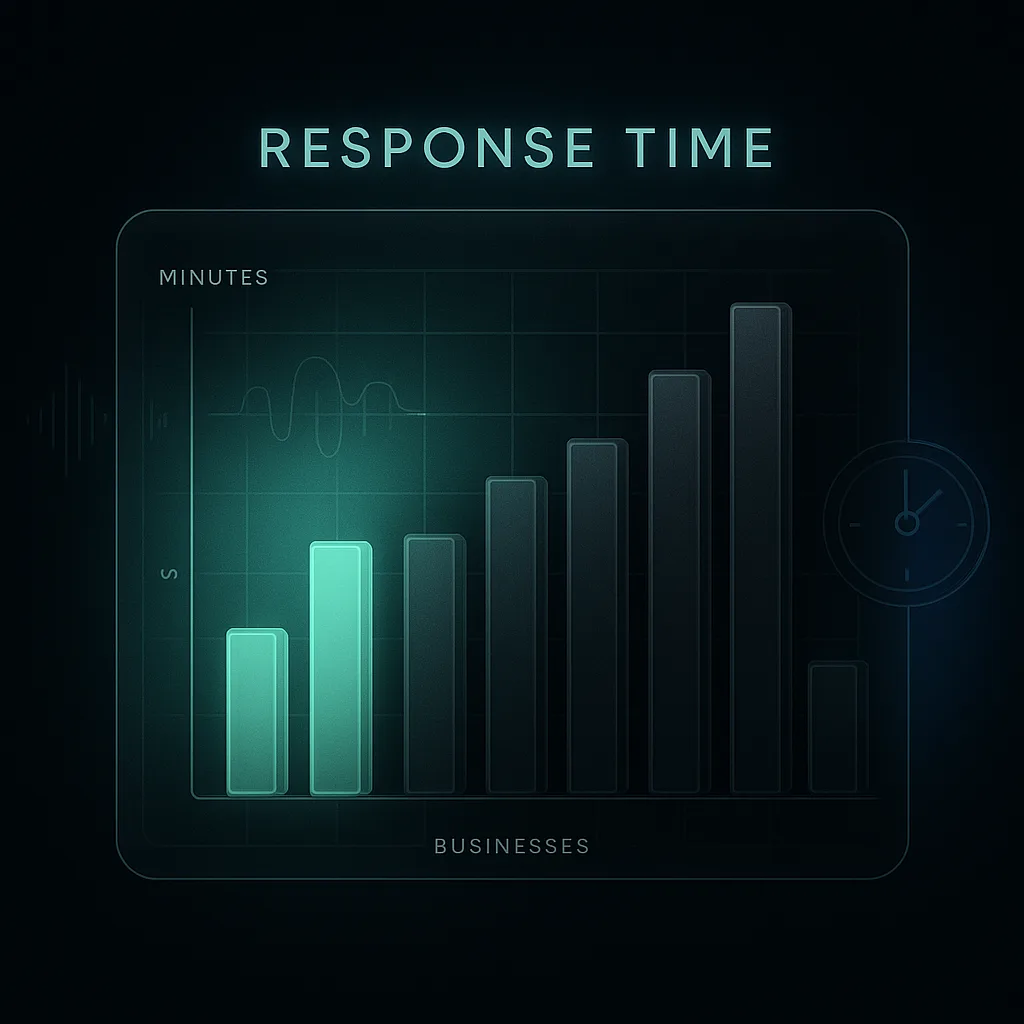
The Harvard Business Review study “The Short Life of Online Sales Leads” audited 2,241 companies and found the average first response took 42 hours, with only 37 percent responding inside an hour. The businesses that did respond quickly were far more likely to reach and qualify the lead. Speed did not just help them connect. It put them in the conversation first, before anyone else had a chance to frame it.
There is a simple human reason for this. The first competent business a person talks to sets the standard. They hear that business out, they get their questions answered, and they start to feel like the decision is basically made. Everyone who calls after that is fighting uphill against a choice the person has already half-committed to. First contact is not just first in time. It anchors the whole comparison.
03Why the first caller has an unfair advantage
Being first does more than get you in the door. It changes the terms.
When you are the first to call, the lead has not yet talked to anyone else. You are not being compared to a competitor’s pitch, because there is no competitor’s pitch yet. You get to answer their questions cleanly, book the appointment, and by the time your competitors call, the person can honestly say “thanks, I already found someone.” You were not better. You were sooner, and sooner did the work.
Now flip it. When you call second or third, the lead already has a frame in their head from the first business. Your job is no longer to help. It is to unseat someone who already earned a little trust, which is a much harder sell for the exact same service. The lever here is not being the best. It is being present in the window where “best” gets decided, which loops right back to how fast you call a new lead.
04The quiet way you lose, without ever seeing it
The reason this problem is so easy to ignore is that losing looks like nothing.
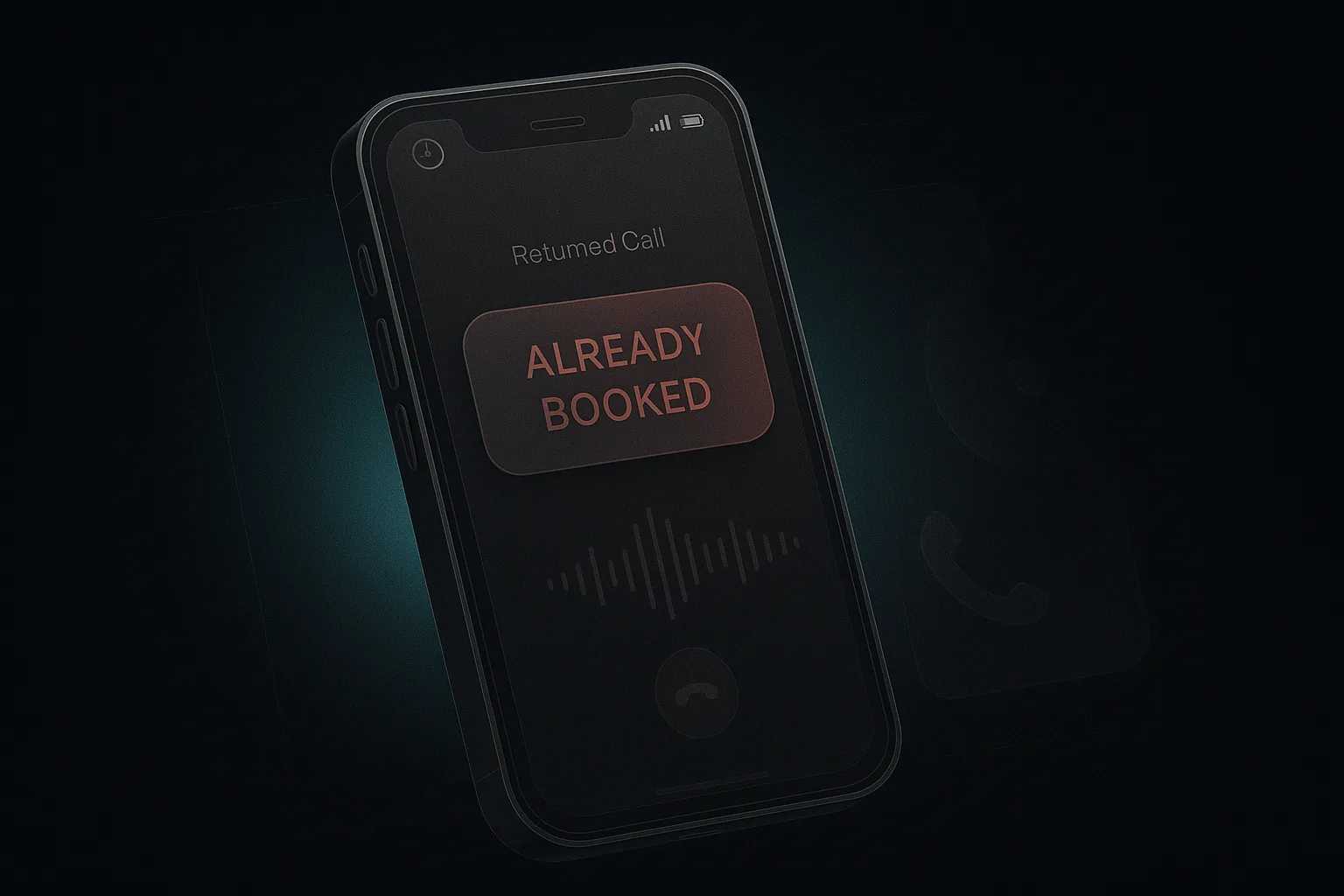
You call the lead back at hour three. It rings out, or they say “oh, I already booked with someone.” You shrug and move on. What you do not see is that they filled out your form and a competitor’s within the same minute, the competitor called in two, and the job was gone before you ever picked up. There is no alert that says “you lost this because you were slow.” It just feels like the lead ghosted, or the lead was junk.
Over a month, this adds up to a real pile of jobs you never knew were winnable. And because it is invisible, the natural conclusion is the wrong one. You decide the leads are bad and go looking for a better source, when the leads were fine and the response was late.
05Buying more leads makes this worse, not better
When jobs are thin, the instinct is to buy more leads. If this is the problem, more leads is exactly the wrong move.
If you are calling leads back in hours, every new lead you buy is another one a faster competitor gets to first. You are not filling your calendar. You are funding theirs, and paying for the privilege. More volume through a slow response just means more leads handed to the business that answers before you do.
The cheaper and bigger fix is to win the leads you already pay for by being the first call, not the fourth. That does not cost a dollar more in ad spend. It is the same reframe behind the 5-minute rule: the constraint is almost never how many leads you get. It is how fast you reach the ones you already have.
06How to be the first caller every single time
To reliably beat two or three competitors to the phone, you cannot depend on being free at the right moment. Something has to call the instant the lead comes in.
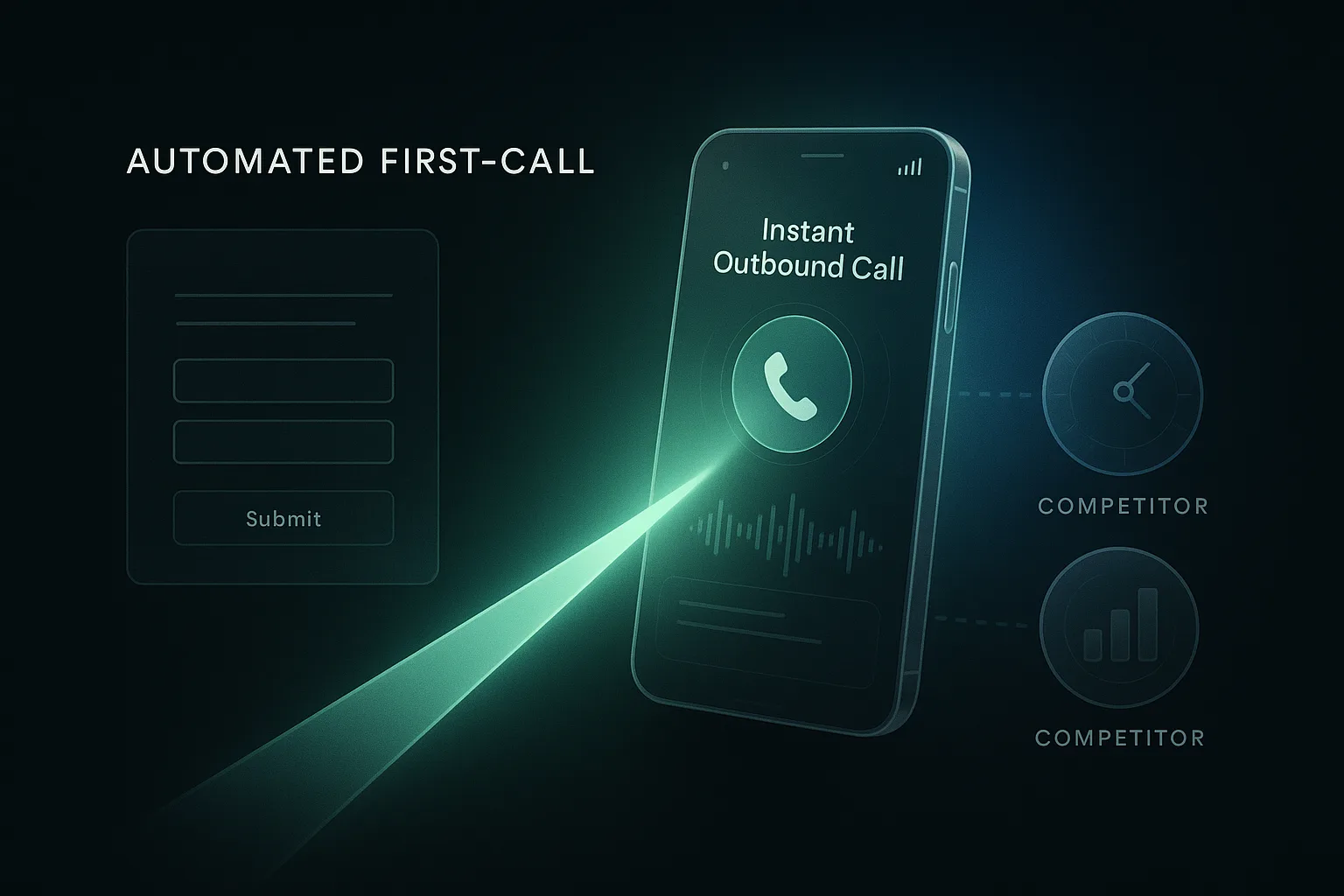
That is the honest case for an automated first response. The second someone fills out your form, an AI places the call, greets them, asks a couple of quick questions, and either books the appointment or hands the lead to you warm, with the context already gathered. While your competitors are still glancing at a notification, you already talked to the person. It does not replace you. It wins the race so the human part of the sale still has a person to sell to.
The advantage is not that a machine is smarter. It is that a machine is never busy, never asleep, and never on another job. Being first stops being a matter of luck and timing and becomes something you do every time by default. The easiest way to understand it is to be the lead once and feel how different a call in under a minute feels.
Frequently asked questions
Do leads really contact more than one business?
For most local services, yes, especially anything urgent or expensive. People compare when they are unsure, and a web form makes reaching several businesses effortless. Assuming your lead only contacted you is the assumption that quietly loses jobs.
If I call first but a competitor is cheaper, do I still win?
Often, yes. Price matters less than most owners think when you are the first competent business to respond. You get to set the frame, answer objections before anyone else does, and book the appointment while the alternative is still theoretical. First contact buys you a lot of forgiveness on price.
How do I know I am losing leads to speed and not to something else?
You usually cannot see it directly, which is the trap. The tell is a pattern of leads that “ghost” or book elsewhere while your response time runs in hours. If you are slow and blaming lead quality, speed is the first thing to rule out.
Won’t calling instantly feel aggressive if they are still comparing?
No, it feels helpful. They just reached out and they want answers. Being the business that responds right away while they are still deciding is precisely how you become the one they decide on.
We are a two-person shop. How can we out-respond bigger competitors?
This is the one place small beats big easily, if you automate the first call. A bigger competitor with a slow process still loses to an instant response. You do not need more people. You need the first call to happen without waiting on a person at all.
The bottom line
Your leads are talking to your competitors because they reached out to several businesses at once, and the first one to call usually wins. The research backs it up: responding fast makes you far more likely to reach and book the lead, and first contact anchors the whole decision. The painful part is that losing this way is invisible, so it gets blamed on bad leads instead of slow response. Buying more leads does not fix it. Being the first caller does, and you can only be first every time if the first call does not depend on you being free.
The fastest way to see this is to feel it. Put your number in at rushdial.com and the AI will call you in under a minute, the same call your leads would get the second they hit your form.