A lead fills out your form at 9:14 on a Tuesday night. You see it at 8:40 the next morning, somewhere between the first coffee and the first job. By then they have filled out three other forms, someone already called them back, and they have half-forgotten they ever found you. That gap, the one between when they raised their hand and when you picked up the phone, is the single biggest thing quietly costing you booked work. And the honest answer to “how fast” is faster than almost anyone thinks. A study of about 3.5 million leads found that calling within a minute lifted conversions by as much as 391 percent over waiting.
01The short answer: minutes, not hours
Most owners think of lead response in hours. “I usually get back to people same day.” Same day is not the game. The window that matters is measured in minutes, and the first one is worth more than all the rest combined.
That 391 percent number comes from an analysis of roughly 3.5 million inbound leads. Contacting a new lead within the first minute produced far more conversions than any slower response. Not 39 percent more. Almost four times.
Here is the part that stings. Nobody feels slow. You reply “same day” and it feels responsive, because compared to the business down the street who takes two days, it is. But the lead is not comparing you to the slowest option. They are comparing you to whoever called them back first, and that person often called back in the time it took you to finish the job you were on.
Speed is not a nice-to-have you get to after you fix your ads or your website. It sits in front of all of it. You can pay more for leads, write better copy, run a prettier site, and still lose the lead to a competitor who did none of that and simply answered first.
02What the research actually says
You do not have to take my word for it. Two of the most-cited studies on this are old enough that the pattern has held for more than a decade.
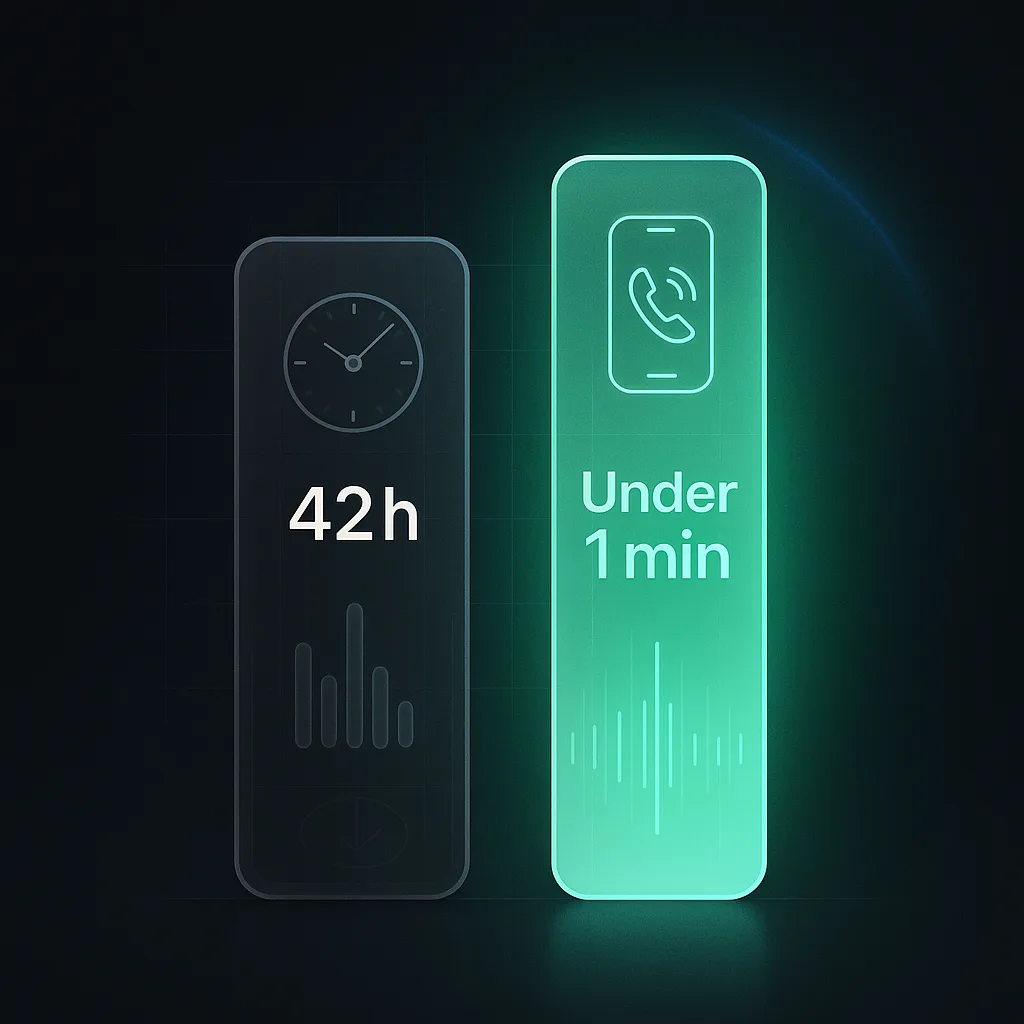
The first is a Harvard Business Review study called “The Short Life of Online Sales Leads.” Researchers audited 2,241 US companies and timed how long each took to respond to a web inquiry. The average first response was 42 hours. Only 37 percent of companies answered within an hour. Twenty-three percent never responded at all. The companies that did reach out within an hour were about 7 times more likely to have a real conversation with a decision maker than the ones who waited even a single hour longer.
The second is a lead-response study out of MIT, often tied to Dr. James Oldroyd. It found that trying to reach a web lead within 5 minutes versus 30 minutes made you around 100 times more likely to actually connect, and roughly 21 times more likely to qualify the lead. Same lead. Same offer. The only variable that changed was how long it sat.
Read those two findings next to each other and the takeaway is blunt. Most businesses respond in hours or days. The odds of the lead answering fall off a cliff in the first few minutes. So the average business is bringing a response time to a fight that was decided before they showed up.
03Why speed beats the things you are tempted to fix first
When bookings are soft, the instinct is to buy more leads. Turn the ad budget up. Try a new channel. More at the top, more at the bottom, or so the thinking goes.
But if you are calling leads back in hours, more leads mostly means more leads going cold. You are pouring water into a bucket with a hole in it and buying a bigger hose. The cheaper fix, and usually the bigger one, is to work the leads you already pay for before they go stale. I wrote more about that trap in why your leads talk to your competitor before you call back.
Think about the math for a second. If you spend the same on ads but call every lead back in under a minute instead of the next morning, you did not raise your cost per lead by a cent. You just stopped throwing a chunk of them away. That is the rare improvement that costs nothing and compounds every single day.
04What actually happens in the first five minutes
The reason speed works is not magic. It is human.

When someone fills out your form, they are on their phone, they are thinking about this exact problem, and they have not yet decided who they trust. Their leaky water heater, their Botox appointment, their roof, whatever it is, it is the most present thing in their head. Call them in that window and you are not interrupting. You are answering a question they just asked out loud.
Wait an hour and the moment is gone. They have moved on to the next thing, they have filled out other forms, and when your number finally rings they half-remember reaching out and half-wonder if you are spam. Wait until the next day and you are a stranger calling about something they were briefly curious about yesterday.
Speed does not just improve your odds of connecting. It changes the whole tone of the call. Fast, and you are the helpful business that was right there. Slow, and you are one more sales call in a day already full of them. The 5-minute rule exists because that is the window where the lead still feels like a person with a live problem instead of a name on a list.
05The two places speed quietly leaks
Almost every business that is “slow to respond” is not slow on purpose. They are slow in two predictable places.
The first is after hours. Leads do not come in on your schedule. A lot of them land at night and on weekends, exactly when nobody is watching the inbox. Those leads sit until Monday, which for a same-day buyer might as well be never. If you run any paid ads, you are literally paying to generate leads at 9pm and then letting them cool for twelve hours.
The second is the busy day. The irony is that your best days for work are your worst days for lead response. You are on a job, hands full, phone in your pocket. Three leads come in. You will get to them tonight, you tell yourself, and tonight you are tired and you get to one. The days you most need the extra booking are the days you are least able to chase it.
Both leaks have the same shape. It is not that you do not care. It is that responding fast, every time, at every hour, is a job nobody on a small team can actually hold. That is the real problem, and it is why “just be faster” as advice never sticks.
06What fast looks like when you build for it
If the goal is to call every new lead in under a minute, at every hour, the only thing that does that reliably is a system, not a person.
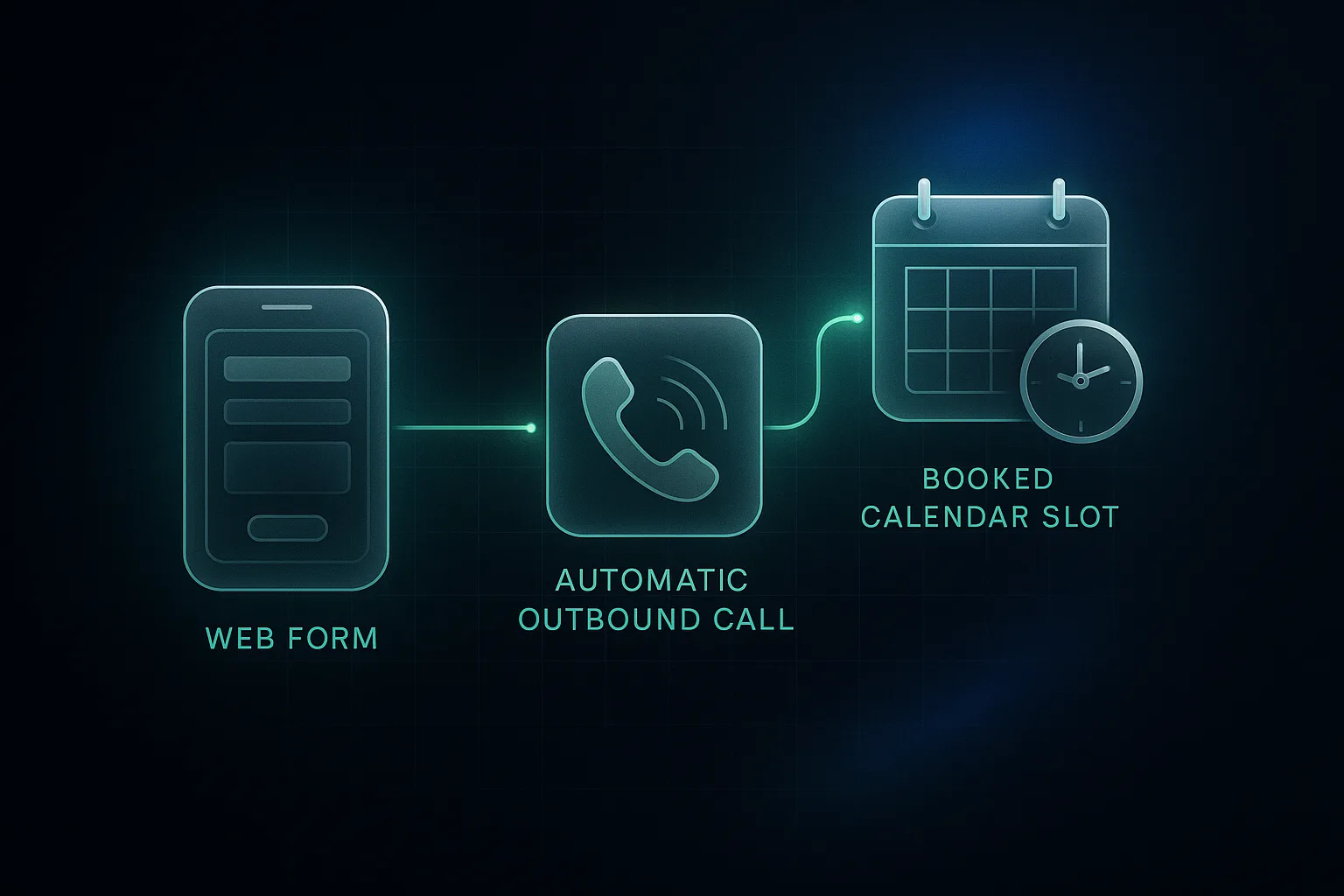
That is the honest case for using software here, and it is worth being honest about what it does and does not do. An AI can watch your form, and the second a lead comes in, place a call. It can greet the person, ask a couple of qualifying questions, and either book the appointment or hand off to you with the context already gathered. What it cannot do is be you. It will not close a nuanced deal or handle a complicated situation the way you would. It is there to win the first minute, so the lead is still warm when a human takes over.
Used that way, the tradeoff is easy. The AI covers the nights, the weekends, and the busy afternoons when a lead would otherwise sit. You and your team do the part that needs a human. Nobody has to stare at an inbox, and no lead has to wait until you are free.
You do not have to believe any of this on faith. The fastest way to feel it is to be on the receiving end of it once.
Frequently asked questions
Is one minute really necessary, or is “within an hour” good enough?
Within an hour beats within a day, so if that is where you are, it is real progress. But the research is clear that the first minute is worth the most, and the odds of connecting drop sharply after the first five. “Within an hour” is a fine floor. It is not the ceiling, and your faster competitors are not aiming for it.
Does calling that fast annoy people?
Less than you would think, and far less than being slow. The person filled out your form seconds ago. They are expecting to hear from someone. A fast, friendly call reads as attentive, not pushy. What annoys people is filling out a form and hearing nothing for two days.
We are a small team. How are we supposed to respond in seconds?
You are not, at least not by hand. No small team can watch the inbox around the clock. That is exactly the gap software is for. The point is not to work harder at being fast. It is to make fast automatic so it does not depend on someone being free.
What if the lead comes in at 2am?
Then it should still get a fast response, inside legal calling hours. A good setup calls right away when it is a reasonable hour for the person and queues the rest for first thing in the morning, so a 2am lead is the first call of the day instead of an afterthought.
Is this just for one industry?
No. The pattern holds anywhere a fresh lead has a live problem and options: med spas, home services, dental, contractors, any local business that runs on booked appointments. The faster you answer, the more of the leads you already pay for turn into work.
The bottom line
The question was how fast you really need to call a new lead, and the answer is faster than feels normal. Minutes, not hours. The first minute is worth almost four times a slower response, the odds of connecting fall off inside the first five, and the average business is still measuring itself in days. The good news is this is the cheapest fix you have. It does not cost more ad budget or a new website. It costs a system that answers before the lead goes cold.
The fastest way to see this is to feel it. Put your number in at rushdial.com and the AI will call you in under a minute, the same call your leads would get the second they hit your form.